
Brain Revives Articles
Recovery guides for the road home
Clear, physician-written articles for patients and families navigating brain injury recovery at home. No jargon. Just what to do next.
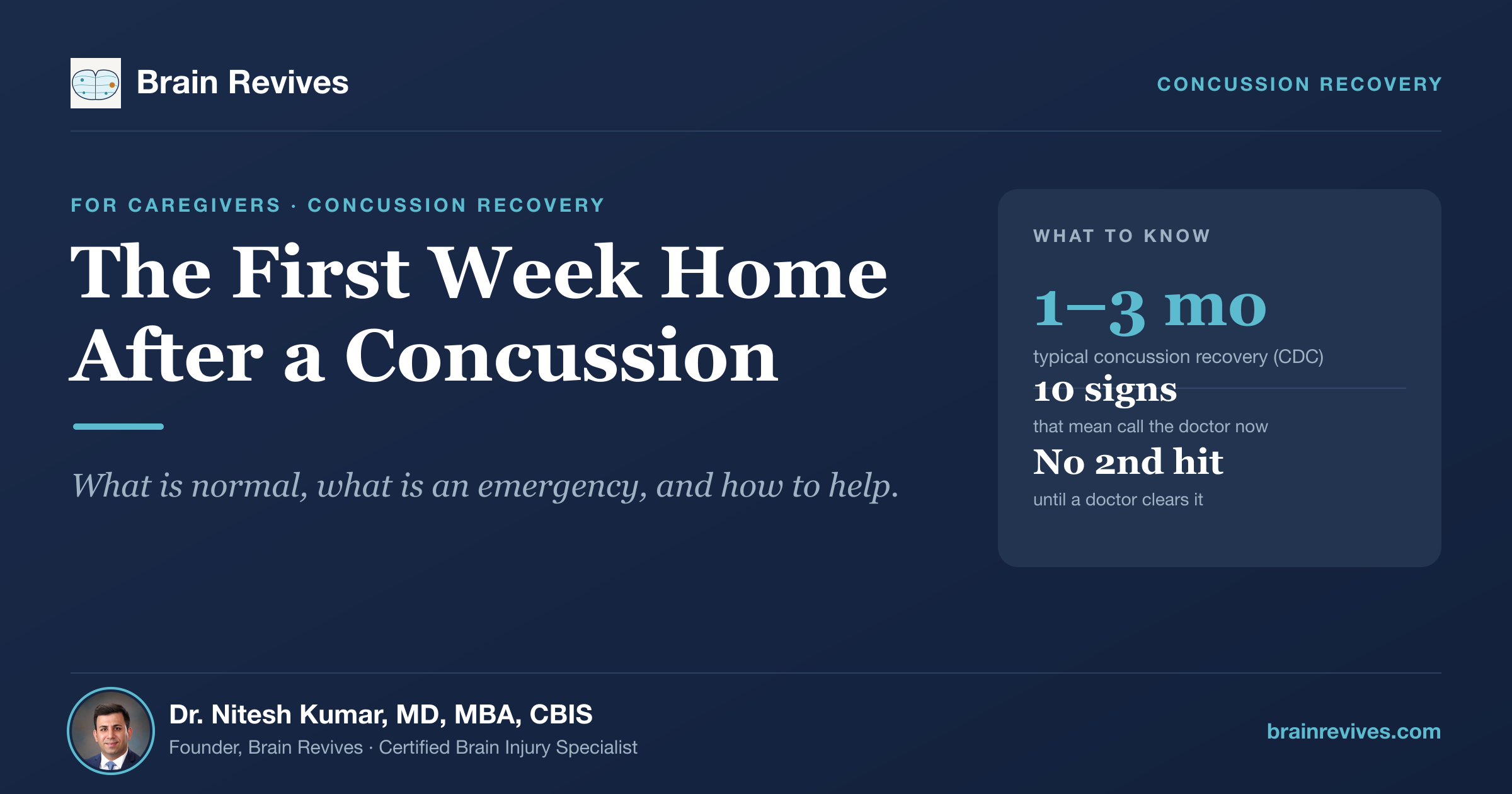
The First Week Home After a Concussion: A Caregiver's Guide to What to Watch For
You're home from the ER with a diagnosis and not much else. Here's what to watch for in the first seven days after a concussion, the warning signs that mean call the doctor, and how to help someone rest and recover.
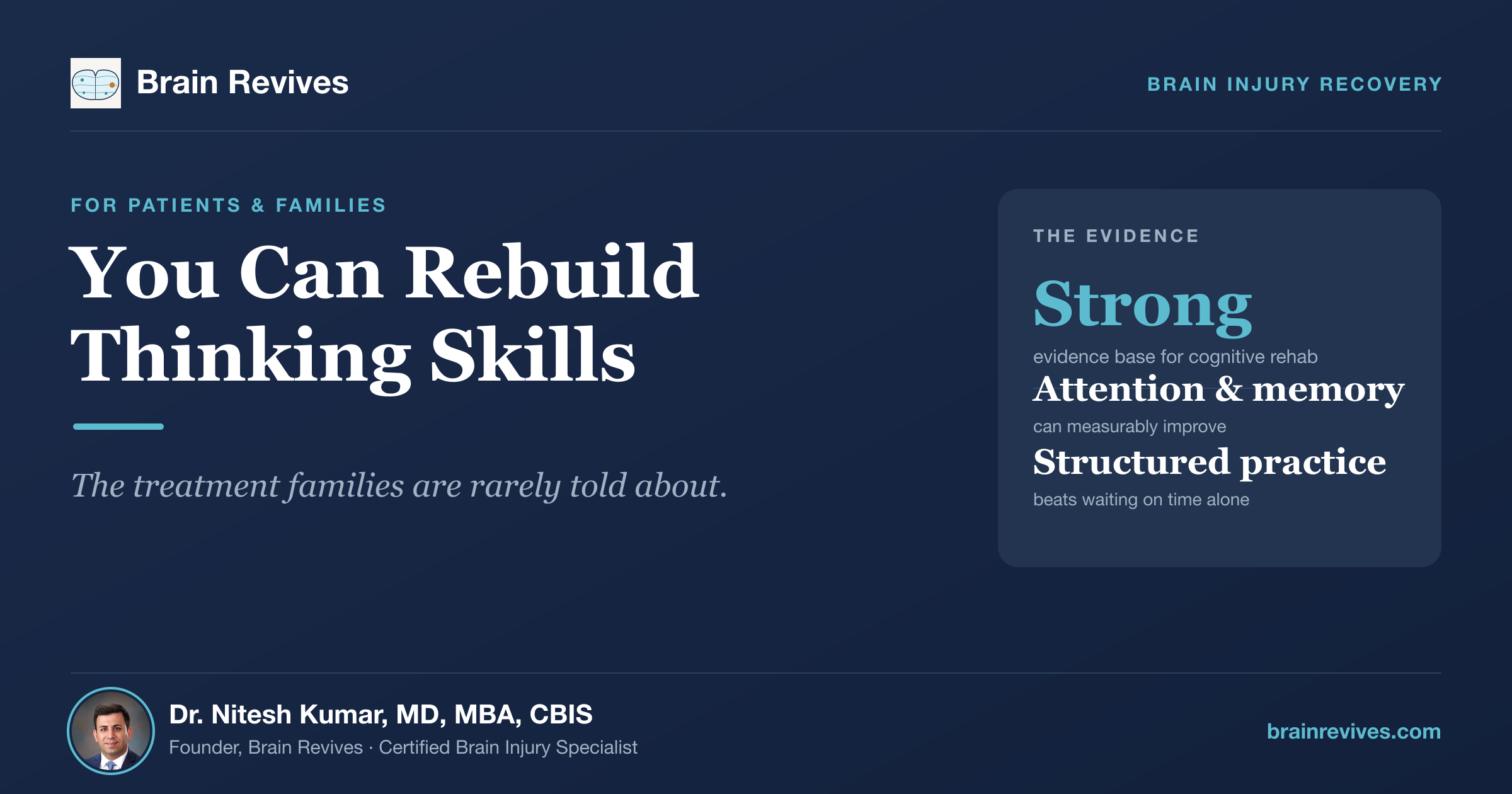
You Can Rebuild Thinking Skills: The Brain Injury Treatment Families Are Rarely Told About
There is a huge body of evidence for rebuilding attention, memory, and daily thinking after brain injury. Most families never hear about it. Here is what helps.
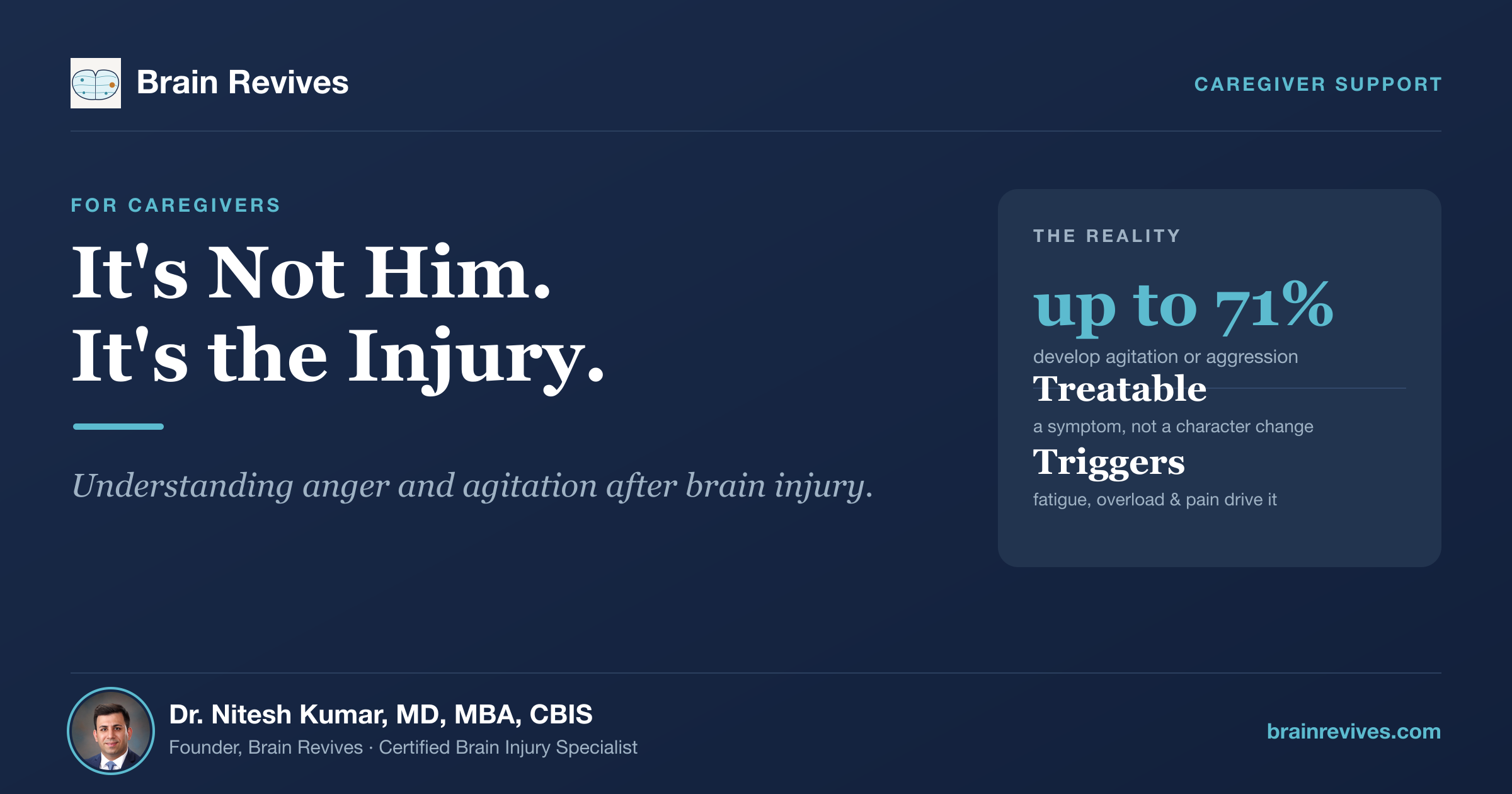
It's Not Him. It's the Injury: Understanding Anger and Agitation After Brain Injury
Up to 71% of brain injury survivors develop agitation or aggression in recovery. It is a treatable symptom, not a change of character. Here is why, and what helps.
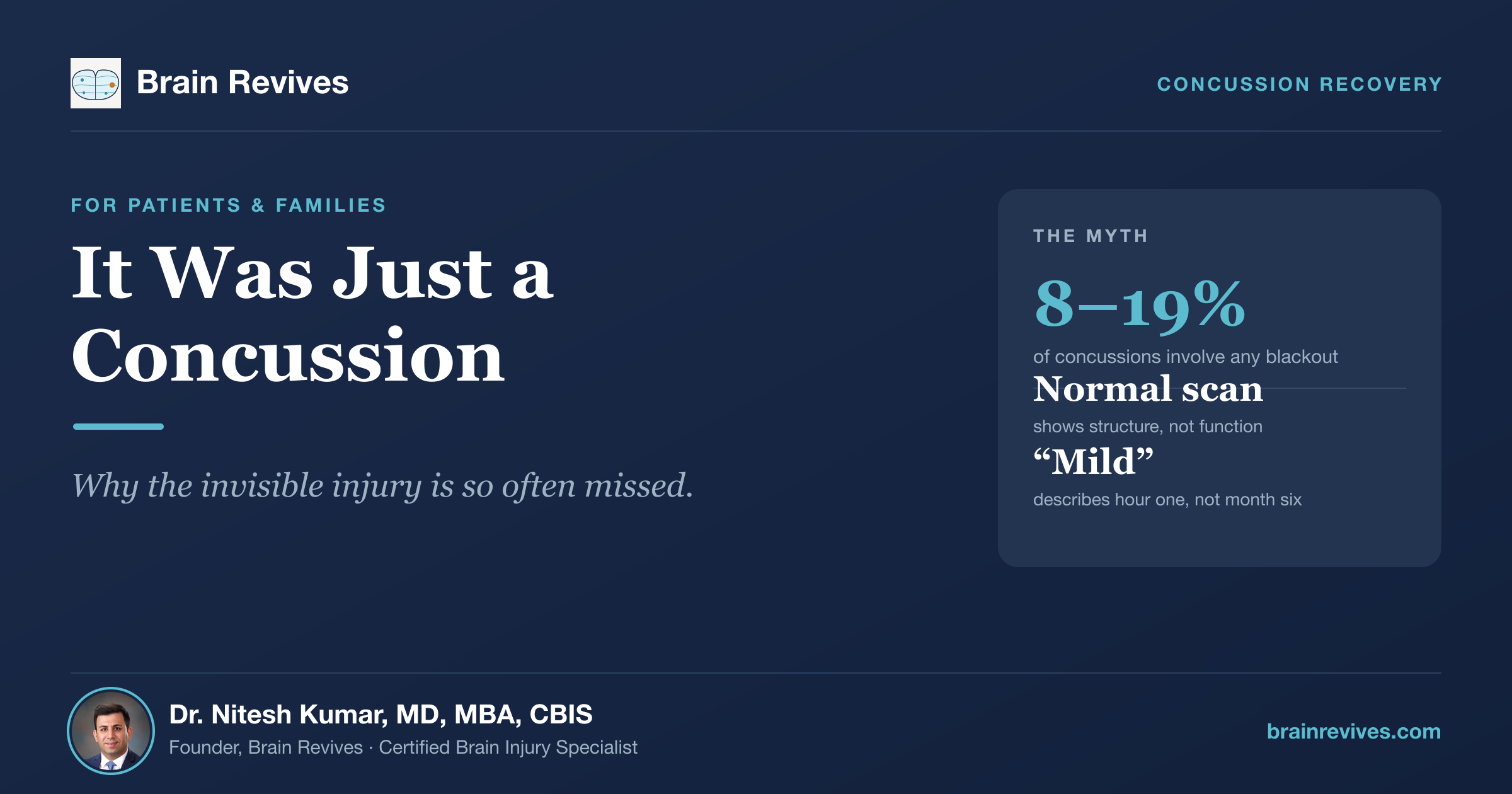
It Was Just a Concussion: Why the "Invisible Injury" Is So Often Missed
No blackout and a normal scan do not mean nothing happened. A physician explains why concussion is so often missed and what actually helps recovery.
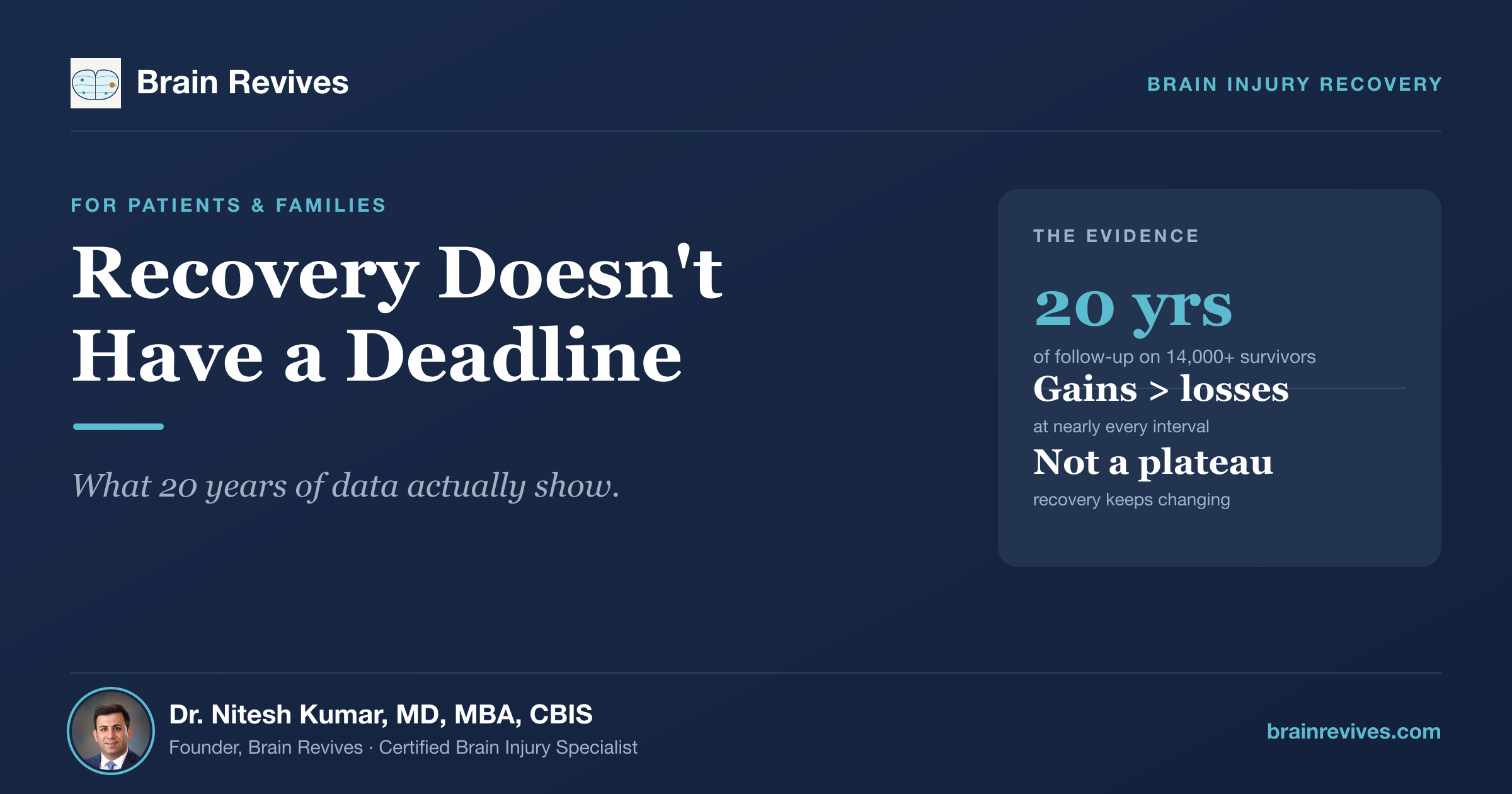
Recovery Doesn't Have a Deadline: What 20 Years of Brain Injury Data Actually Show
Twenty years of data on 14,000+ brain injury survivors show recovery behaves like a chronic condition, not a plateau. Why the 'window has closed' myth is wrong.
Sleep Loss Is a Global Epidemic. Brain Health Starts at Night.
Sleep loss is a population-level brain health issue, not a discipline problem. Why the sleeping brain is where recovery happens, and how to build a repeatable recovery rhythm.
Brain-Computer Interfaces Are Not the Future of Neurology. They Are a Warning About Recovery.
Brain-computer interfaces make headlines for decoding thought into speech and movement. The deeper lesson for TBI and stroke recovery is quieter, and it matters now.
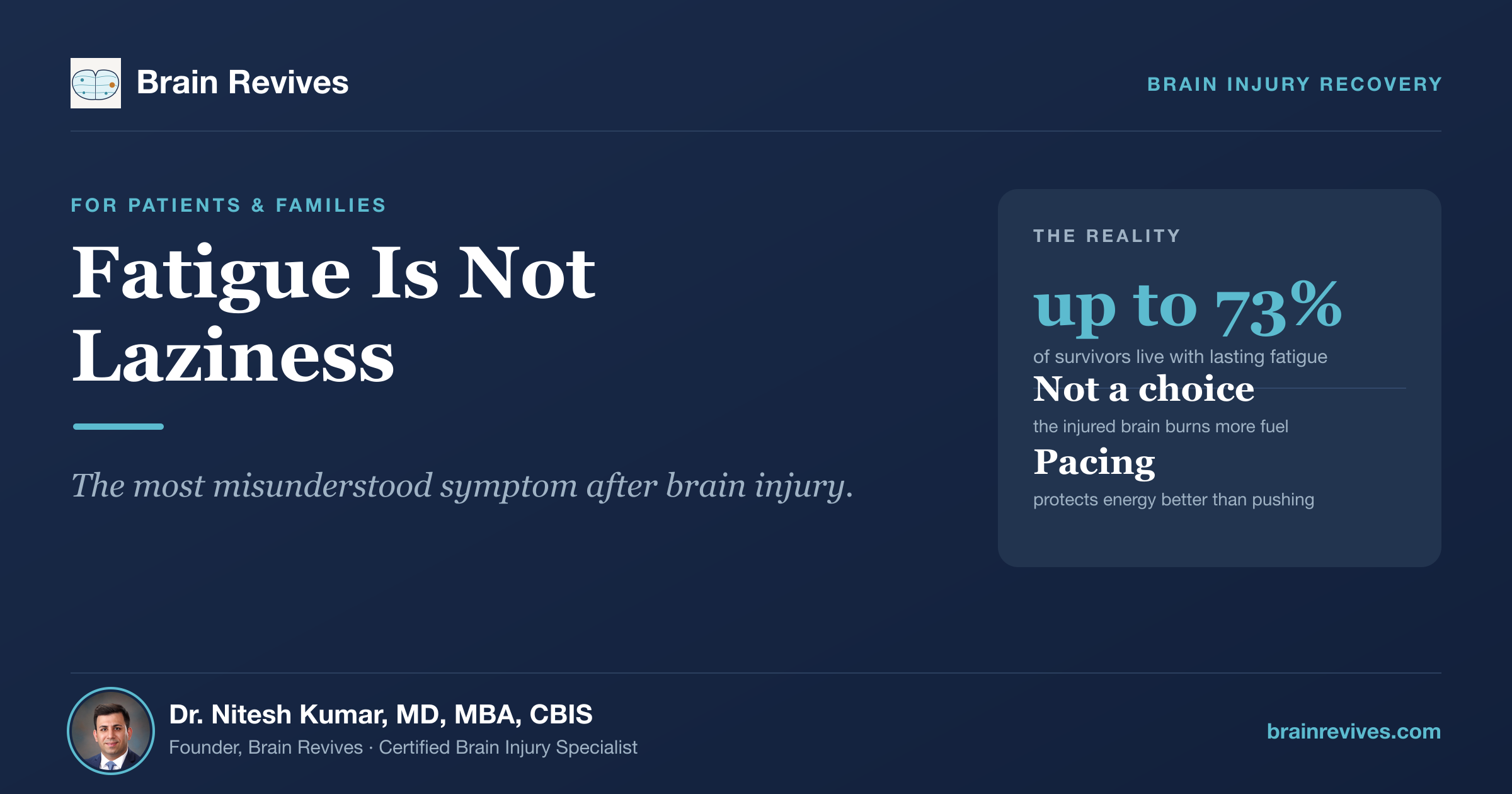
Fatigue Is Not Laziness: The Most Misunderstood Symptom After Brain Injury
Up to 73% of brain injury survivors live with persistent fatigue. It is physiology, not a character flaw. Here is why a healing brain runs out of fuel and what helps.
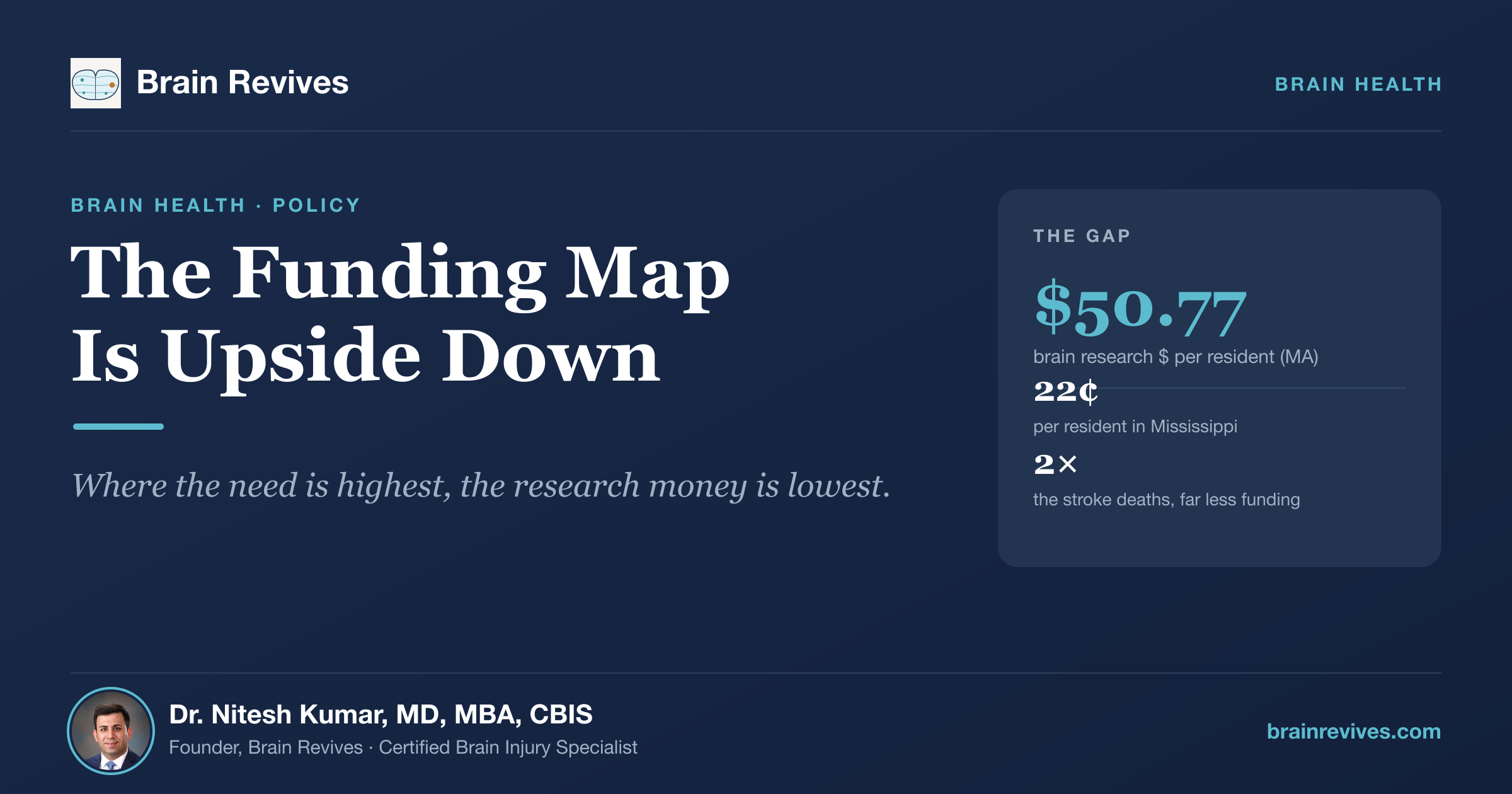
The Brain Health Funding Map Is Upside Down
Massachusetts gets $50.77 per resident in federal brain research funding. Mississippi gets 22 cents, with double the stroke deaths. The fix is translation.