
The First Week Home After a Concussion: A Caregiver's Guide to What to Watch For
You're home from the ER with a diagnosis and not much else. Here's what to watch for in the first seven days after a concussion, the warning signs that mean call the doctor, and how to help someone rest and recover.
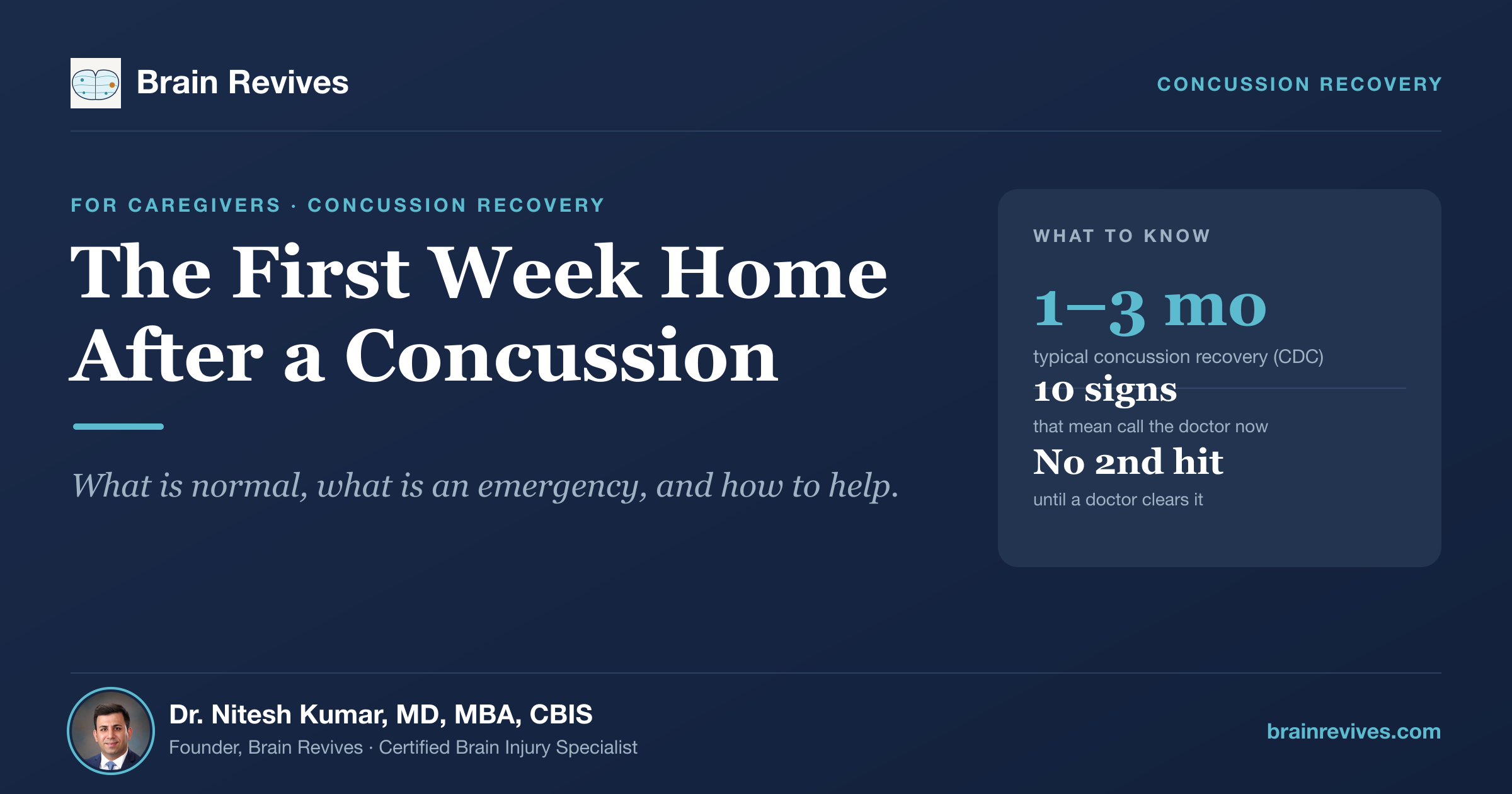
The hospital sends you home with a diagnosis, a discharge sheet, and a lot of silence. Your husband, your mom, your teenager took a hit to the head, the scan was clear, and now you are standing in your kitchen wondering what you are actually supposed to do.
This is the gap almost every family falls into. The emergency care is over, but the recovery has not really started, and no one handed you a plan for the days in between. That first week at home matters more than most people realize. Here is what to watch for, what is normal, and the signs that mean you should stop reading and call the doctor.
What’s normal, and what’s an emergency
A concussion is a mild traumatic brain injury. The brain has been shaken, and for a while it does not process the world as smoothly as it used to. Some symptoms are an expected part of healing. A small number are red flags. This is the one thing to be clear on in the first week:
Usually normal
Part of ordinary recovery
- Headache or a feeling of pressure
- Fatigue in waves; sleeping more
- Sensitivity to light and noise
- Trouble concentrating, or feeling foggy
- Feeling off-balance, dizzy, or a little nauseated
- More irritable, anxious, or emotional than usual
Call 911 now
Go to the ER or call 911 right away
- A headache that keeps getting worse
- Repeated vomiting
- Slurred speech, weakness, or numbness
- Seizures or convulsions
- One pupil larger than the other
- Growing confusion, or can't be woken up
None of the symptoms on the left are pleasant, but on their own they are part of a normal recovery. Most people who have a concussion feel meaningfully better within a couple of weeks, and according to the CDC most children and adults recover from the symptoms of a concussion within about one to three months, with many recovering sooner. Knowing that timeline helps, because the fear that “this is how it will always be” is one of the hardest parts of week one.
The red column is different. A small number of people develop bleeding or dangerous swelling in the brain in the hours and days after a head injury, and it does not always show up right away. The CDC calls these danger signs. For children and toddlers, also watch for constant crying that cannot be consoled and refusing to eat or nurse.
You may have heard the old advice to wake someone every hour through the night after a head injury. For most concussions that is no longer recommended, because sleep is part of healing. But if the person was knocked out, is on blood thinners, or the discharge team told you to monitor closely, follow their specific instructions.
How to help your loved one recover this week
Rest is the treatment, but “rest” is more specific than most people think, and total isolation in a dark room is not the goal either. These five things do most of the work:
Five ways to help this week
- 1
Keep the first day or two quiet and light
Cut back on what overloads a healing brain, screens, bright light, loud noise, hard mental tasks. Not a blackout room, just calmer. A slow walk around the house is fine and often helps.
- 2
Protect sleep
Encourage normal sleep at night and short rests during the day if they are tired. Sleep is when a lot of recovery happens.
- 3
Add normal life back slowly (pacing)
After a day or two, add light activities back as long as symptoms don't flare badly. If a task, screen, or errand clearly makes things worse, ease off and try a smaller version later.
- 4
Skip alcohol; be careful with medications
Ask the discharge team or your doctor what is safe for pain, and avoid alcohol while recovering.
- 5
No second hit
Critical, especially for athletes and kids. A second head injury before the first heals can be far more serious. No sports, biking, or contact activity until a doctor clears it.
Take care of yourself too
You became a caregiver with no training and no warning. The person you are caring for may be irritable, forgetful, or not quite themselves this week, and that is the injury talking, not them. It is exhausting. Line up a friend or family member to trade shifts with, keep your own meals and sleep on track, and write down your questions as they come up so you are ready for the next doctor’s visit.
What comes next
Week one is about safety and rest. The weeks after are about slowly, carefully rebuilding, and that is where most families feel lost, because the follow-up appointment is often weeks away and the questions pile up daily. What can they do today? How much is too much? When should the fog be lifting?
That is exactly why we built the free 30-day recovery guide. It gives you a simple day-by-day framework for the first month at home: the handful of things to track every day, how to protect sleep, how to pace activity so you avoid the crashes, which symptoms need urgent care, and what to prepare for the next physician visit. It was written by a physician and brain injury specialist for families in exactly your position.
You do not have to figure this out alone. Enter your email below and we will send it to you.
Brain Revives provides educational recovery support and is not a substitute for medical care, diagnosis, treatment, therapy, emergency care, or physician-directed advice. If this is an emergency, call 911 or go to the nearest emergency department.